

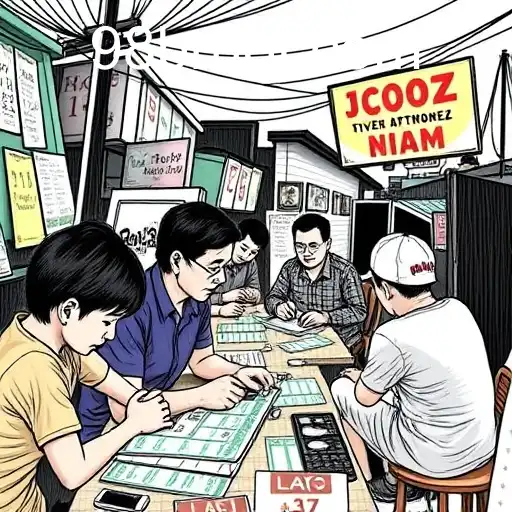
Understanding Jueteng: A Detailed Insight into the Controversial Lottery Game
Jueteng is a numbers game that has become an integral part of Philippine culture. Despite its illegal status, it continues to thrive, particularly in regions where economic opportunities are limited. Often associated with corruption, it has implications that reach beyond simple gambling, influencing politics, society, and economics. This intricate system, woven into the fabric of Philippine society, poses significant challenges and has sparked numerous debates and controversies over the decades.98 br
The Origins of Jueteng
Jueteng's roots trace back to the Spanish colonial era, where 'lotto' games were popular among the elite. Over time, it evolved into a game known as jueteng, derived from the Hokkien words 'hué' (flower) and 'táng' (a place). As the game spread, it adapted to include more numbers and retained its Chinese influences while merging with local practices.999XP
The game is simple: bettors pick combinations of numbers from 1 to 37. These numbers are then drawn by jueteng operators, who usually hold the draw in discreet locations to avoid law enforcement. Despite operations being clandestine, it’s estimated that tens of thousands participate daily, making it a staple within many communities.
999GThe Mechanisms Behind Jueteng
Generally, jueteng operations follow a structured hierarchy. At the bottom are collectors, known locally as "kubrador," who roam neighborhoods gathering bets. These bets are passed on to "cabo" or coordinators, who collate the data and funds before transferring them to the operators running the draw. The operators, who are at the top of the jueteng pyramid, have considerable influence and are able to manage these vast, intricate networks effectively.
Despite its illegal status, jueteng remains popular because it offers low-stakes, high-reward potential. Minimal bets attract participants from various socio-economic backgrounds, especially those hoping to make quick money. In many cases, jueteng is even seen as an informal social safety net, providing financial support in regions where government assistance is insufficient.
Jueteng's Economic Impact
999GWhile jueteng's underground nature makes accurate data collection difficult, it is estimated to generate billions of pesos annually. This economic impact is felt at local levels, where it supports not only the operators but also the numerous agents who earn a percentage from the bets collected. For some communities, jueteng money funds local projects, providing jobs and boosting economies that might otherwise struggle without such economic infusion.
Yet, the illegal aspect of jueteng means that it contributes significantly to corruption. Politicians and law enforcement officials are often alleged to receive "protection money" from jueteng operators, allowing the game to persist without interference. This illegal flow of money distorts economic data and undermines government efforts to stamp out corruption and establish a transparent economy.
Political and Social Implications
Jueteng's influence extends beyond its economic footprint into the realms of politics and social development. Politicians often have an ambiguous relationship with jueteng, as evidenced by numerous scandals over the years. Some have been accused of using jueteng operators to rig elections, while others are alleged to have benefitted materially by turning a blind eye to the operations.
This illicit lottery contributes to systemic corruption, weakening trust in public institutions. Local governments face particular challenges as they attempt to curb its operations while simultaneously relying on the economic benefits it brings. As such, jueteng continues to be a polarizing topic, criticized for its moral implications yet tolerated for its economic necessity.
Efforts to Tackle the Issue
The government has periodically ramped up efforts to eliminate jueteng, often by attempting to provide legal alternatives like the Philippine Charity Sweepstakes Office (PCSO)'s Small Town Lottery (STL). However, these efforts frequently fall short due to competing interests and a lack of political will. STL often fails to provide the scope and reach of jueteng, which is deeply embedded and more accessible.
Enforcing jueteng laws is also challenging, hampered by corruption and the decentralized nature of the operations. To combat this, some argue for legalizing and regulating jueteng as a pragmatic approach, allowing the government to impose taxes and use the revenue for public services. This proposition, however, requires meticulous regulation and robust legal structures to ensure oversight and transparency.
Conclusion: The Persisting Challenge
999GJueteng persists as a critical issue within Philippine society, reflective of deeper social and economic inequalities. While it provides immediate economic benefit to many, the underlying costs in terms of corruption and its impact on governance cannot be ignored. Understanding this complex system in its entirety is crucial for policy-makers aiming for reform. Without comprehensive strategies to address its root causes, jueteng will continue to pose significant challenges to Philippine society, wrapping itself around political, social, and economic pillars, influencing them in pervasive and enduring ways.